
Mountain Mint Hydrosol: A Simple Stovetop Method from the Herb Garden
I've wanted to make a hydrosol for years.
The problem is that every time I mentioned it to my distilling friends, the conversation inevitably turned to beautiful copper stills. Apparently, that's the gold standard. And while I'd love to own one someday, I haven't quite been able to justify the investment.
Meanwhile, my garden keeps growing.
Originally, I planned to experiment with peppermint because I have more peppermint than any one herbalist could reasonably use. But then I found myself standing in front of a patch of mountain mint and changed my mind.
Here at PonderLand Gardens & Native Plant Sanctuary in the foothills of western North Carolina, mountain mint is one of our favorite native plants. We don't generally harvest from established native populations on the property, but we do cultivate native plants in our gardens and enjoy experimenting with them in the kitchen and apothecary.
And honestly, on a 95-degree summer day, mountain mint just sounded refreshing.
What Is a Hydrosol?
A hydrosol is the aromatic water created during steam distillation.
As steam moves through fresh plant material, it captures aromatic compounds from the plant. When that steam cools and condenses, it becomes a fragrant botanical water known as a hydrosol.
Unlike essential oils, hydrosols are gentle and water based. They are wonderful as facial mists, body sprays, room sprays, and simple botanical luxuries.
Think of them as a softer expression of a plant. Subtle, approachable, and infused with its aromatic character.
Why Mountain Mint?
Mountain mint (Pycnanthemum species) may be one of the greatest pollinator plants I've ever grown. Its flowers are constantly buzzing with native bees, butterflies, beneficial wasps, and other insects. Every summer the patch becomes one of the liveliest places in the sanctuary.
The mountain mint featured in this project is hoary mountain mint (Pycnanthemum incanum), one of my favorite native plants.
What I love most, though, is the aroma.
Most people hear the word mint and think peppermint. Mountain mint is different. It certainly has a cooling menthol-like quality, but there is something wilder and more complex beneath it. I pick up notes that remind me of pennyroyal and other aromatic mints, along with an almost camphoraceous freshness.
The fragrance always surprises me because it feels so alpine.
Even standing in a North Carolina summer when the temperatures are pushing 95 degrees, a handful of freshly harvested mountain mint somehow evokes icy mountain air, snow-capped peaks, and cool breezes rolling through high elevations. Every time I harvest it, I find myself wondering how a plant that smells so crisp and invigorating thrives so happily in our summer heat.
The beautiful thing about mountain mint is its resilience. Even after harvesting a generous armful for this project, the plants are already filling back in and putting on fresh growth.
Equipment You'll Need
Whatever it is, the way you tell your story online can make all the difference.For this simple stovetop method, I used:
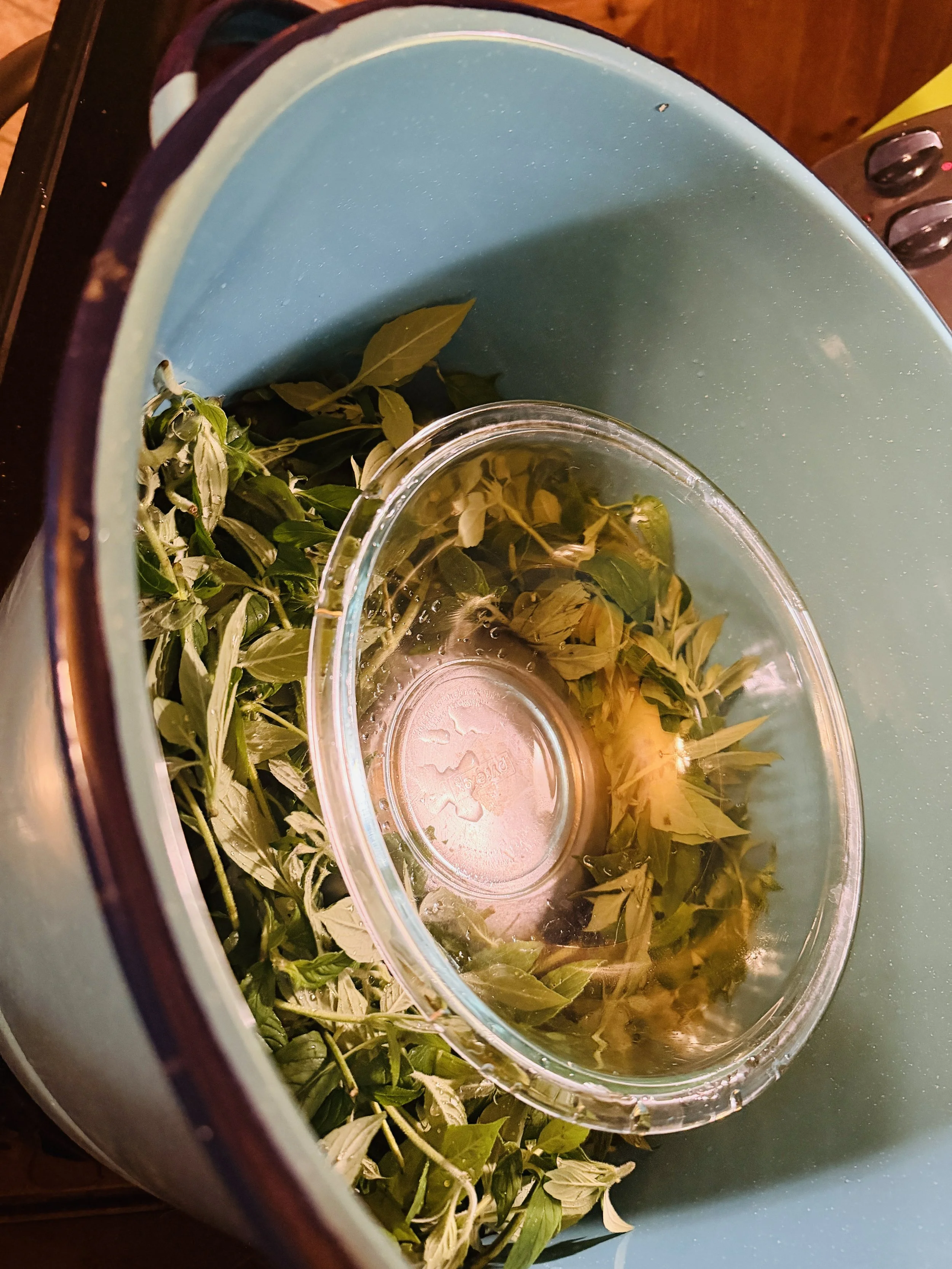
A large stockpot
A heat-safe bowl
An inverted lid
Fresh mountain mint
Water
Ice
Clean bottles for storage
No Copper Still Required
My Simple Stovetop Method
I placed a heat-safe bowl in the center of a large stockpot and packed fresh mountain mint around it.
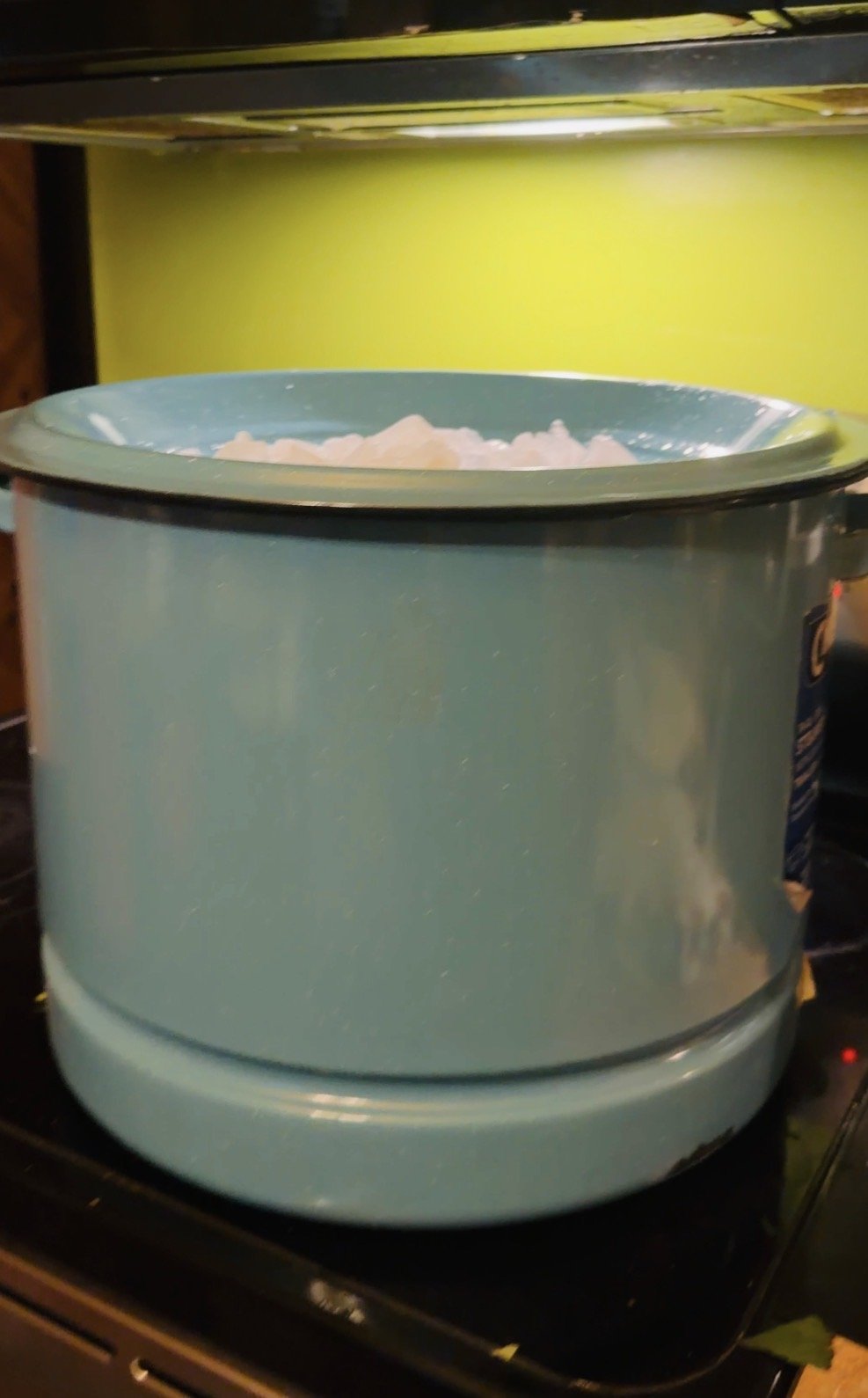
Next, I added water around the herbs, making sure the collection bowl remained empty. Then I placed the lid upside down on the pot and filled the top of the inverted lid with ice.
A note about water. I probably used more than necessary. My stockpot is quite large, and I added roughly four to five quarts of water. Looking back, two to three quarts may have been enough. I
Technically, you want enough water in the pot that there is no danger of it boiling dry during the distillation. At the same time, more water means more dilution. Finding that sweet spot is part of the learning process.
SO MUCH ICE!
One thing I had not fully considered was how much ice this project would require.. About forty minutes into the distillation, I had completely emptied every ice cube tray in the freezer. My husband ended up making an emergency ice run and came home with two bags so I could keep the lid cold for the rest of the afternoon.
I will admit I was tempted to peek.
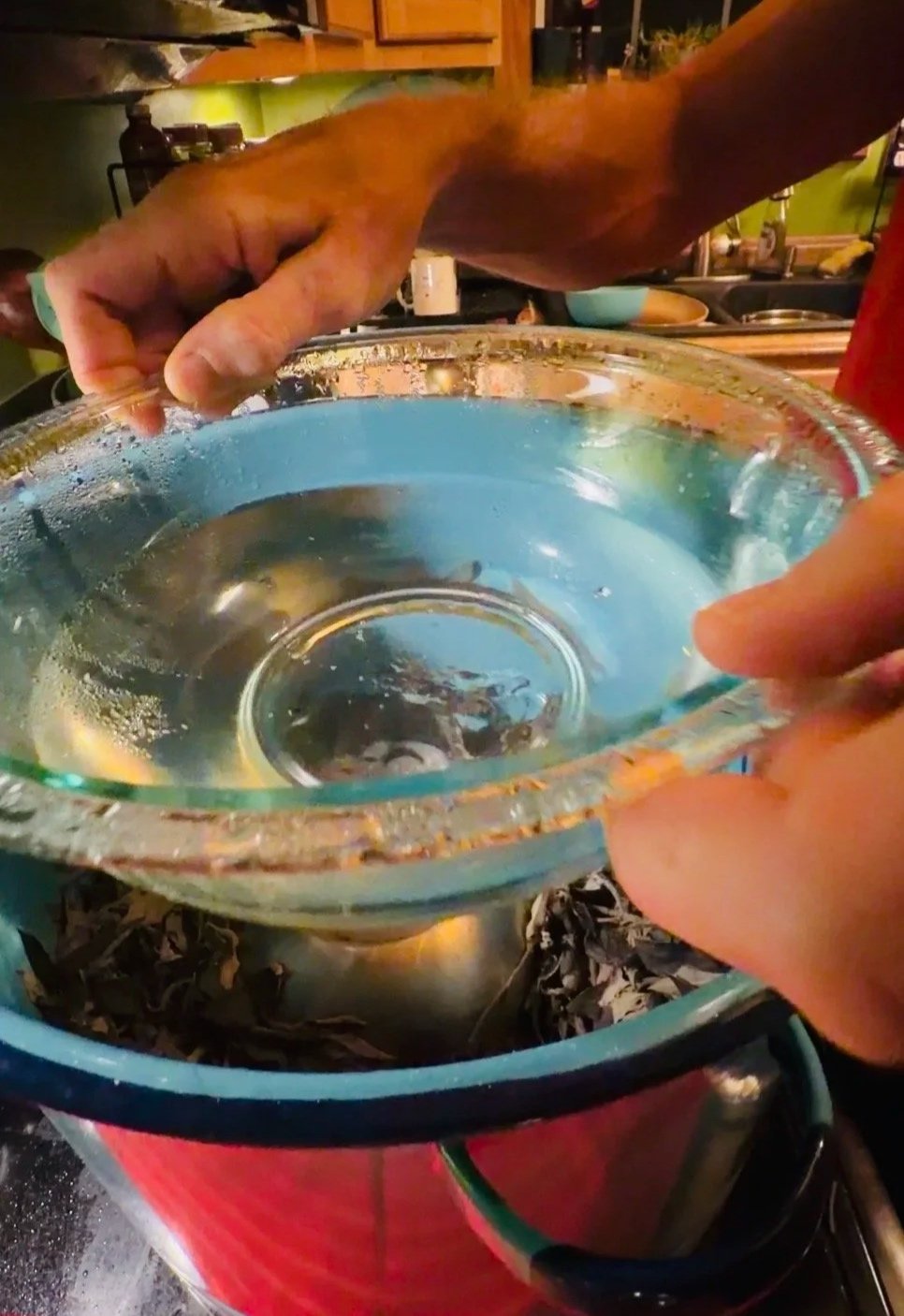
In fact, I lifted the lid once, just briefly. When I saw liquid pooling in the collection bowl with a beautiful sheen floating on top, I was absolutely tickled.
That was the moment I knew it was working.
Aromatic Water
As the water gently simmered, aromatic steam rose through the herbs. The cold lid caused that steam to condense and drip into the collection bowl.
The process took about three hours. My husband helped me remove it so we could funnel it into a jar.
Right away, we could tell that Alpine cooling character came through beautifully in the hydrosol. The finished hydrosol is subtle rather than bold. Think of rosewater, but lighter, greener, and touched with a whisper of mountain mint's refreshing spirit.

How I Use Mountain Mint Hydrosol
This has quickly become one of my favorite summertime creations.
I use it as:
A facial mist
A cooling spray after gardening
A room spray
A linen mist
A refreshing pick-me-up during the workday
While I was bottling this batch, my daughter happened to be visiting. She tried it immediately and fell in love with it.
That might have been my favorite part of the entire project.
Watching someone experience the plant for the first time reminds me why I love making herbal preparations in the first place.
One unexpected bonus was the liquid left behind in the pot after distillation. Rather than pouring it out, I added some to a bath that evening, and it was lovely. The fragrance was subtle, but after spending the afternoon surrounded by mountain mint, it felt like one more way to enjoy the plant.
The whole experience has my mind swimming with possibilities.
Peppermint is still waiting its turn. I have plenty growing in the garden, and I suspect a peppermint hydrosol is in my future. My husband, however, already has his sights set on tulsi. Knowing us, there will probably be several more experiments before summer is over.
Will these homemade hydrosols rival the beautifully crafted distillations produced by my friends with professional copper stills? Probably not.
But that was never really the point. For me, this is homestead herbalism. It is curiosity, experimentation, and finding simple ways to bring more plants into everyday life. A bottle of mountain mint hydrosol sitting in the refrigerator, ready for a cooling spritz on a hot afternoon, feels a little bit magical. And sometimes that is more than enough.
Storage Considerations
Because hydrosols are water based, they are more perishable than many other herbal preparations.
I recommend:
Using sterilized bottles
Refrigerating whenever possible
Avoiding contamination from fingers or unclean spray tops
Discarding if the aroma changes or the liquid becomes cloudy
For best quality, I prefer making smaller batches and enjoying them fresh.
A Note from the Sanctuary
One of the things that made this project especially meaningful was the pot itself.
The bright blue enamel stockpot you see in the reel is one of the pots we used at our wedding.
As I stood in the kitchen swapping out ice, checking the water level, and resisting the urge to peek under the lid every five minutes, I found myself smiling at the memories attached to that old pot.
That is one of the reasons I love herbalism.
A simple project can connect so many threads at once. The garden. The family. The seasons. The plants. The stories we carry with us.
This mountain mint hydrosol may not have come from a fancy copper still, but it came from our sanctuary, our kitchen, and a summer afternoon shared with family.
And honestly, I think that is pretty special.
Happy distilling,
Mimi Prunella Hernandez
Herbal & Home